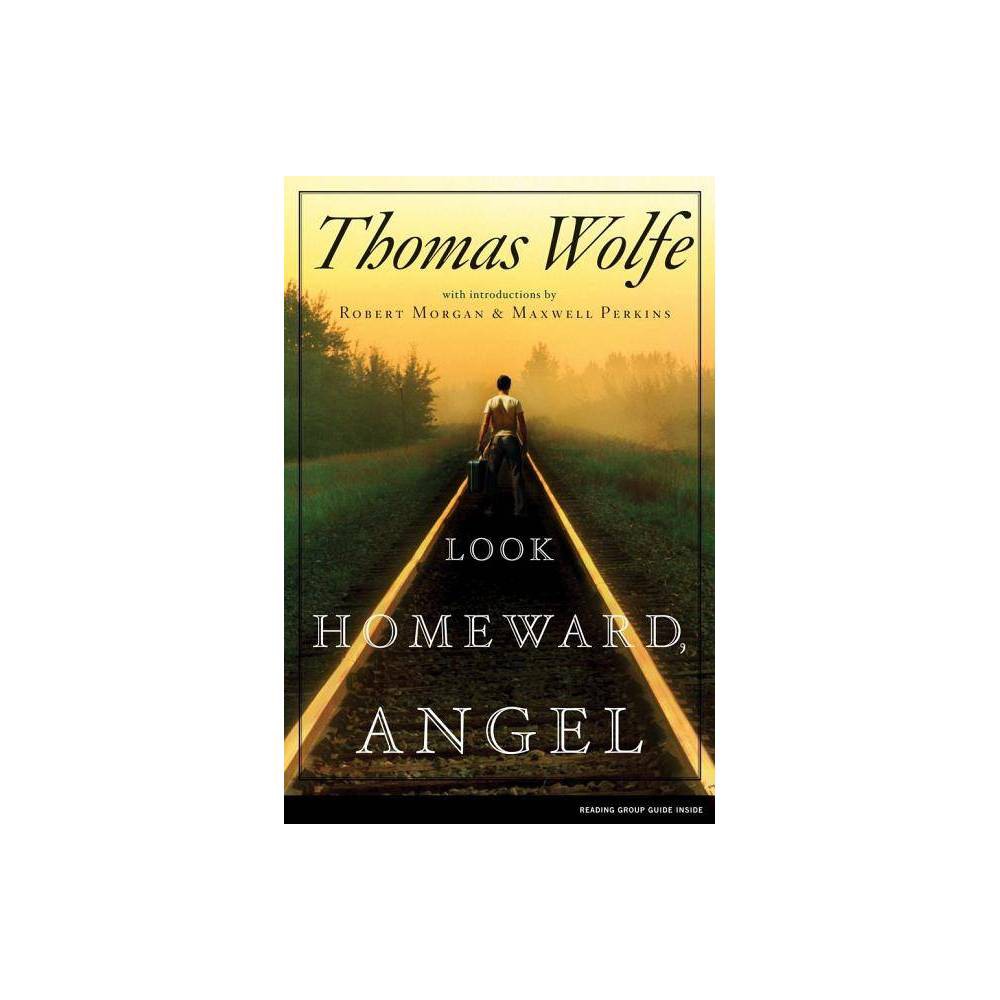
Look Homeward, Angel - by Thomas Wolfe (Paperback)
(0 review)
About the Book Thomas Wolfe's classic coming-of-age novel, first published in 1929, is a work of epic grandeur, evoking a time and place with extraordinary lyricism and precision. Set in Altamont, North Carolina, this semi-autobiographical novel tells the story of a restless young man who longs to escape his tumultuous family and his small town existence. Book Synopsis The spectacular, history-making first novel about a young man's coming of age by literary legend Thomas Wolfe, first published in 1929 and long considered a classic of twentieth century literature.A legendary author on par with William Faulkner and Flannery O'Connor, Thomas Wolfe published Look Homeward, Angel, his first novel, about a young man's burning desire to leave his small town and tumultuous family in search of a better life, in 1929. It gave the world proof of his genius and launched a powerful legacy. The novel follows the trajectory of Eugene Gant, a brilliant and restless young man whose wanderlust and passion shape his adolescent years in rural North Carolina. Wolfe said that Look Homeward, Angel is "a book made out of my life," and his largely autobiographical story about the quest for a greater intellectual life has resonated with and influenced generations of readers, including some of today's most important novelists. Rich with lyrical prose and vivid characterizations, this twentieth-century American classic will capture the hearts and imaginations of every reader. Review Quotes "In 1949, when I was sixteen, I stumbled on Thomas Wolfe, who died at thirty-eight in 1938, and who made numerous adolescents aside from me devotees of literature for life. In Wolfe, everything was heroically outsized, whether it was the voracious appetite for experience of Eugene Gant, the hero of his first two novels, or of George Webber, the hero of his last two. The hero's loneliness, his egocentrism, his sprawling consciousness gave rise to a tone of elegiac lyricism that was endlessly sustained by the raw yearning for an epic existence-for an epic American existence. And, in those postwar years, what imaginative young reader didn't yearn for that?